

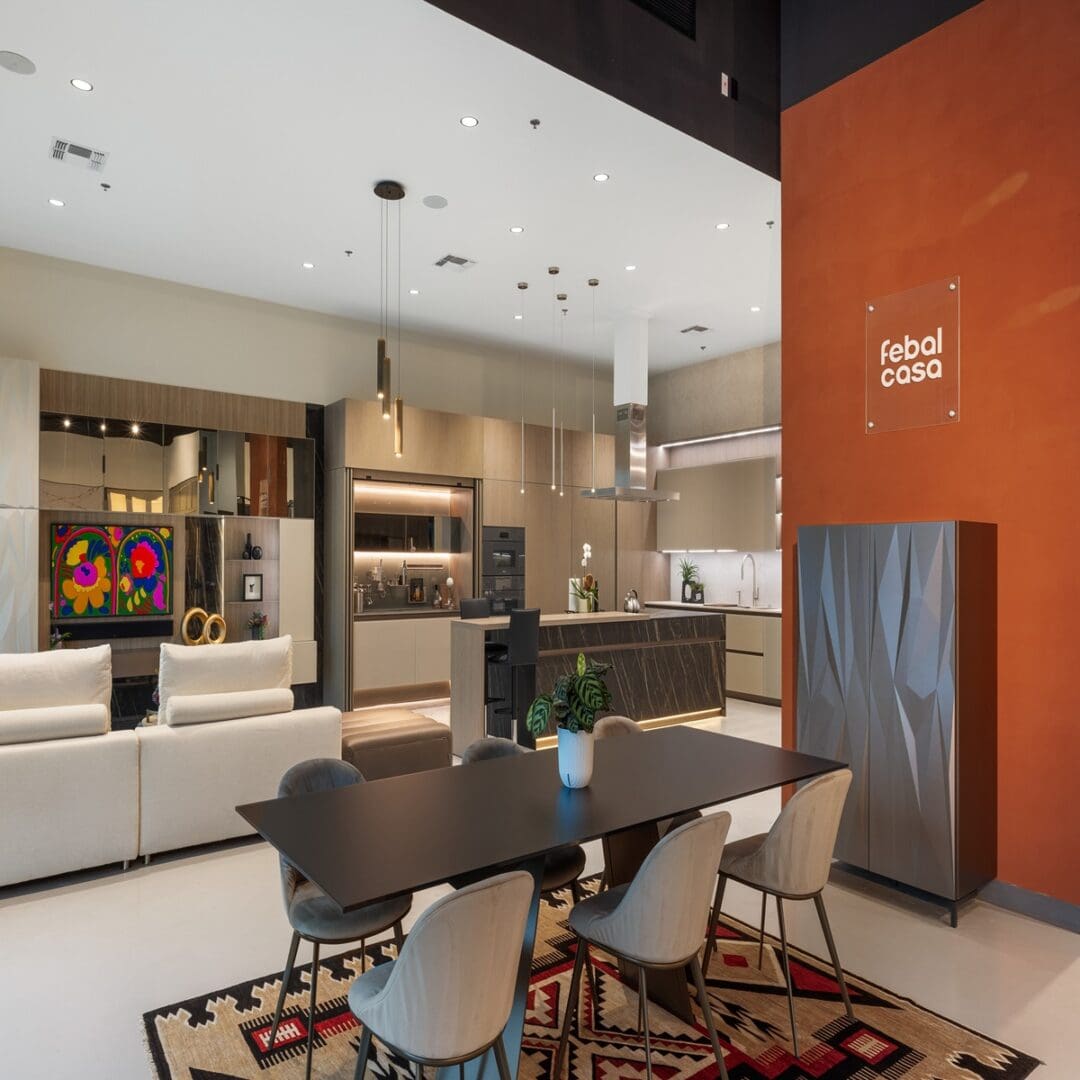
Febal Casa Scottsdale Partners with Architects to Create More Cohesive Luxury Homes
By working alongside architects, designers, and builders, the Scottsdale showroom helps bring integrated residential projects to life.
SCOTTSDALE, Ariz. — As home design becomes increasingly complex, one strategy is shaping how projects come together: collaboration. At Febal Casa Scottsdale, that approach is not just encouraged, it is built into the process.
Known for its “total living” philosophy, the showroom works closely with architects, designers, and builders to ensure that each project feels cohesive from the earliest concept through final installation. Rather than operating as a standalone vendor, Febal Casa integrates into the broader project team, supporting both the creative vision and the technical execution behind it.
“These relationships come together in different ways,” said Bogdan “Bobby” Banica, owner of Febal Casa Scottsdale. “Sometimes the client comes to us first and we coordinate with their team of architects, designers and builders. Other times, we’re brought in because the design team already knows our product is the right fit. Either way, our role stays the same; we’re there to support the project from beginning to end.”
Febal Casa has collaborated with a range of architects and design professionals locally and nationally, including Cullum Homes, Blue Heron Homes in Las Vegas, Jennifer Brookes, and Stephanie Larsen. Those partnerships reflect a broader shift in the industry, where design is no longer segmented by room or vendor, but approached as a complete system.
That shift often begins early in the process. By working alongside architects during the planning phase, Febal Casa helps ensure that cabinetry, storage, and living systems are fully integrated into the architecture, rather than layered in later.
“We’re not just thinking about how something looks,” Banica said. “We’re thinking about how it’s going to be built, how it’s going to function, and how it all comes together in the end.”
In one recent residential project, early collaboration with the architect led to a rethinking of how the kitchen connected to the rest of the home. Instead of treating it as a standalone space, the team worked together to create a system that felt fully integrated into the surrounding architecture, both visually and functionally.
That type of outcome is a direct result of aligned perspectives. Febal Casa’s team brings backgrounds in architecture, design, and construction, allowing them to anticipate challenges early and resolve them during the design phase rather than on-site.
What that collaboration looks like in practice:
Early integration: Working with architects and designers during concept development to align layout, materials, and structural considerations.
Design support: Contributing cabinetry and storage solutions that reinforce the overall architectural vision.
Technical coordination: Anticipating construction challenges and resolving them before they reach the job site.
Execution alignment: Ensuring that design intent is maintained through manufacturing, delivery, and installation.
Project continuity: Remaining involved from initial planning through final completion as part of a unified team.
That alignment often translates into a more efficient process overall. Design decisions are made with greater clarity, timelines are more predictable, and the risk of miscommunication between trades is reduced.
Through their partnerships, the Febal Casa team is able to extend beyond cabinetry into a full range of project services, including installation, countertops, electrical, and plumbing. For architects and designers, that means fewer moving parts and a more streamlined path from concept to completion.
“It simplifies the process for everyone involved,” Banica said. “Instead of coordinating across multiple vendors, everything is aligned under one team. That makes a big difference in how smoothly a project runs.”
That level of coordination is becoming increasingly important as homeowners move toward more integrated, design-driven spaces. Open-concept living, in particular, has blurred the lines between kitchen, living, and dining areas, requiring a more thoughtful approach to how those elements connect.
For architects and designers, that makes Febal Casa a different kind of partner. “We understand how they think,” Banica said. “A lot of our background is in architecture and construction, so we’re able to speak the same language. That helps us anticipate challenges early and keep things moving without surprises. Every time we collaborate like that, the end result is stronger.”
As Scottsdale continues to grow as a hub for high-end residential design, that collaborative model is becoming less of an exception and more of an expectation.
At Febal Casa, it is already the standard.
To learn more, visit febalcasausa-scottsdale.com.
