From Japan, With Flavor: Shinbay Brings Authentic Omakase to Scottsdale
Long before the first guest takes a seat at Shinbay in Scottsdale, dinner is already underway.
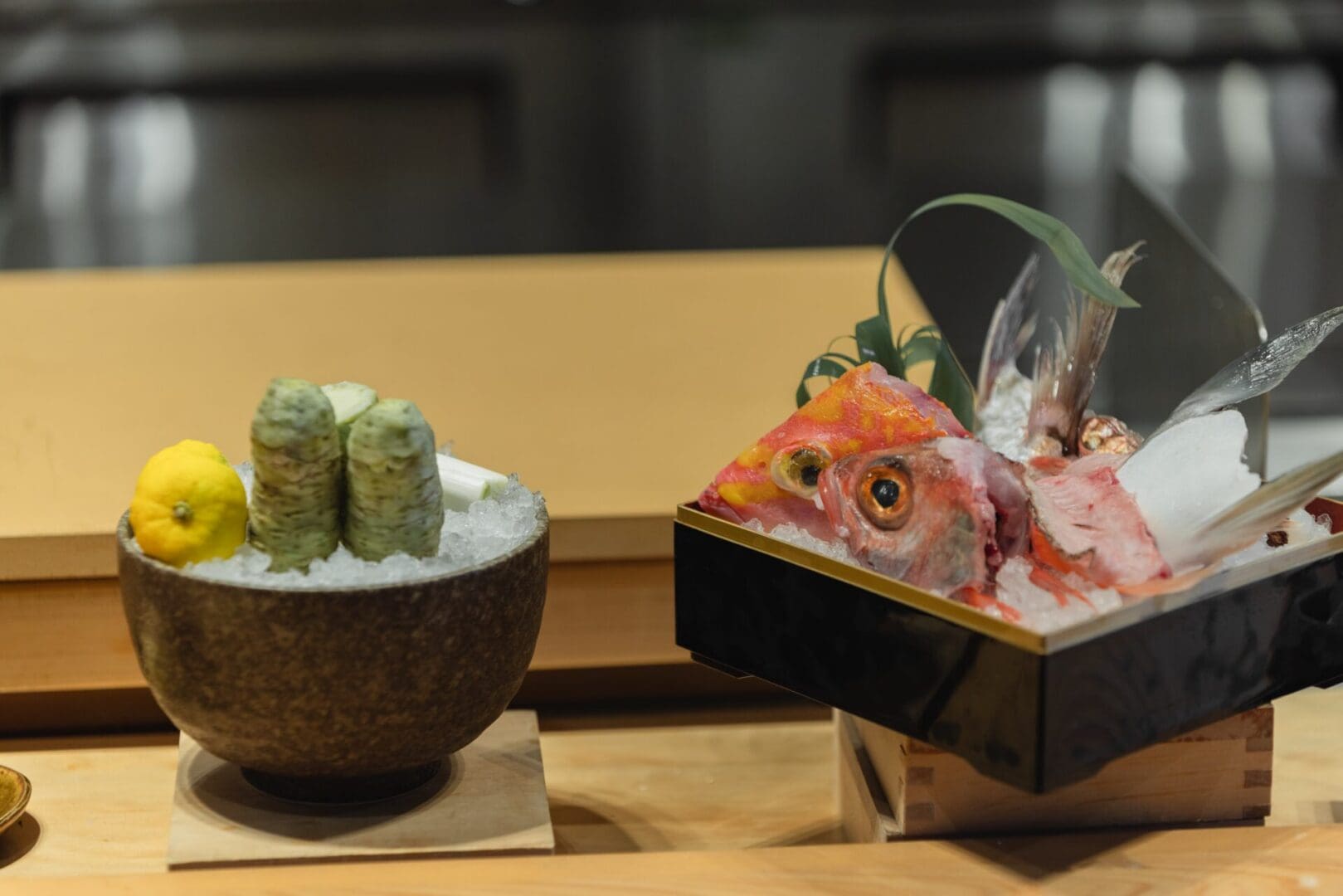
Thousands of miles away, master chef Ken Tanaka is in communication with long-time partners at fish markets in Tokyo, Osaka and Nagasaki, learning what has arrived from Japan’s surrounding waters and determining which ingredients are worthy of making the journey to Arizona.
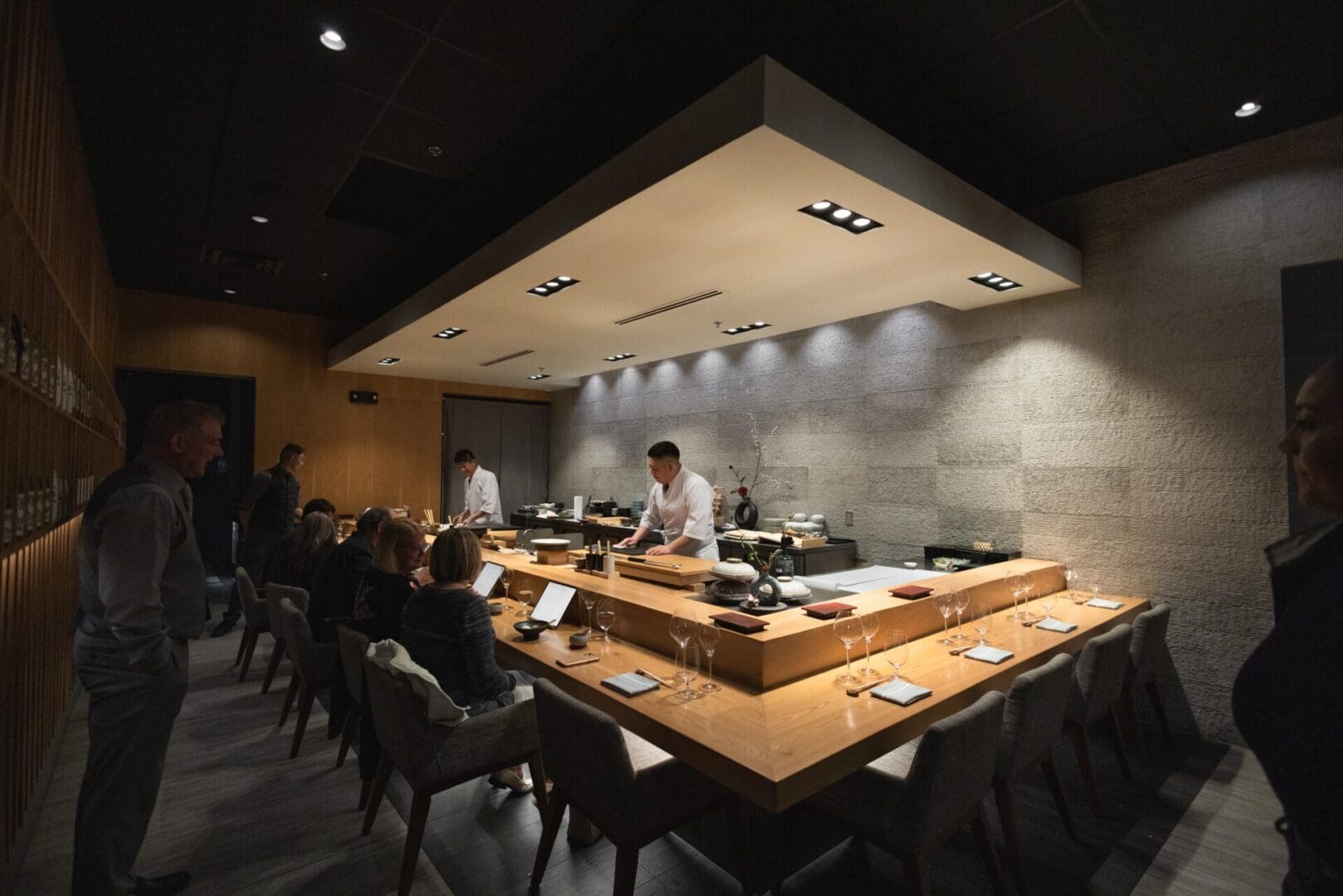
Those selections are carefully packed, flown across the Pacific and often served within 48 hours, eventually landing before just 12 guests seated around a handcrafted wooden counter in Scottsdale.
Welcome to omakase.
Translated to “I leave it up to you,” omakase is a centuries-old Japanese dining tradition built around the relationship between chef and guest. Rather than selecting individual dishes from a menu, diners allow the chef to create a progression based on seasonality, availability and the finest ingredients at that particular moment.
At Shinbay, that tradition is taken seriously.
Tanaka is recognized in Japan as both an itamae, or master sushi chef, and a shokunin, a distinction reserved for artisans who devote their lives to mastering a craft. Today, he brings that training and philosophy to an intimate Scottsdale setting where two seatings are offered nightly, each featuring approximately 12 to 14 courses prepared just inches from guests.
The experience begins with a personal welcome before diners are escorted to the counter, where individual iPads provide that evening’s menu in English and Japanese. From there, Shinbay’s longtime host introduces the traditions behind omakase and serves as part storyteller and part culinary guide throughout the evening, sharing details about ingredients, preparation and even how certain courses are best enjoyed.
Then Tanaka takes over.
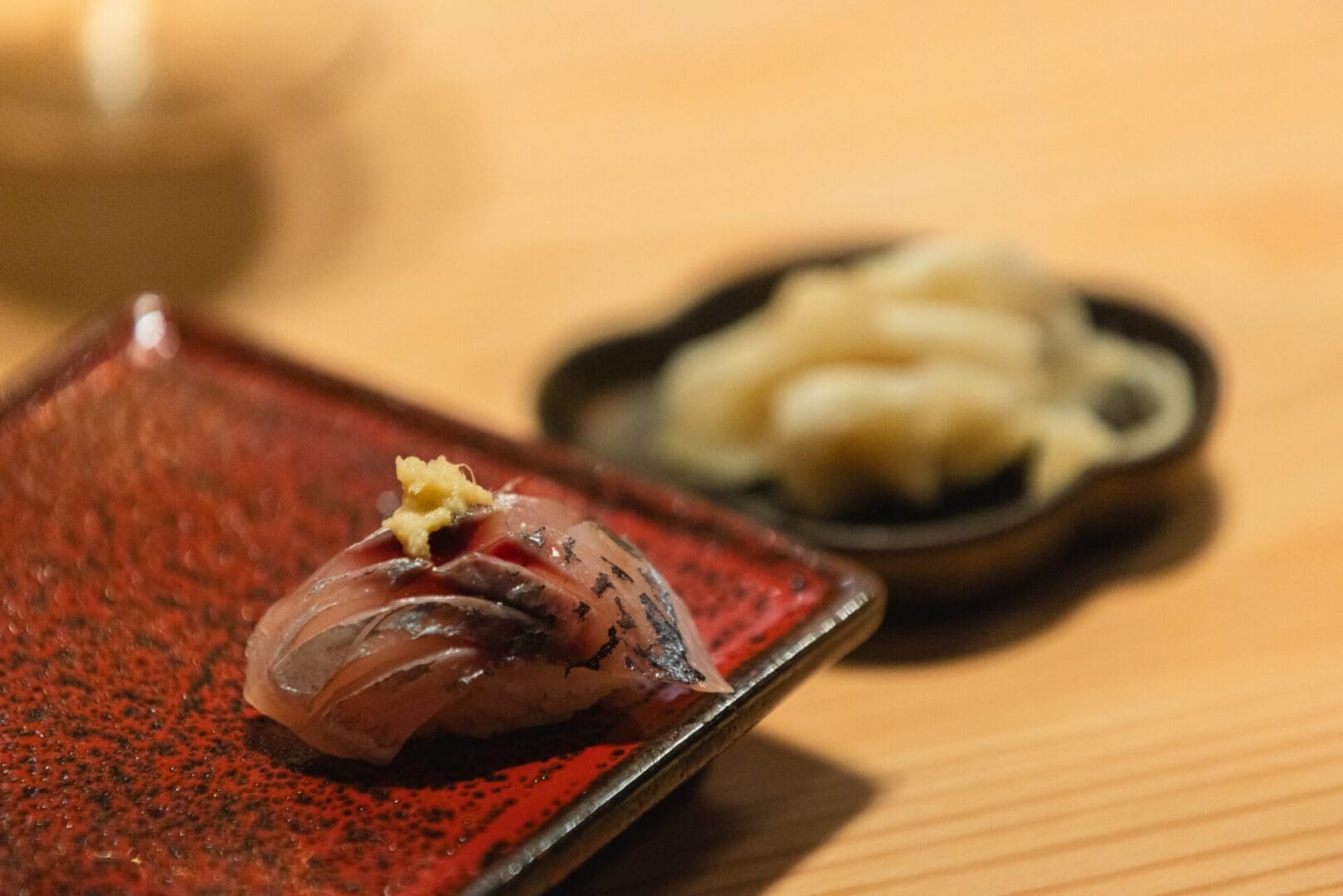
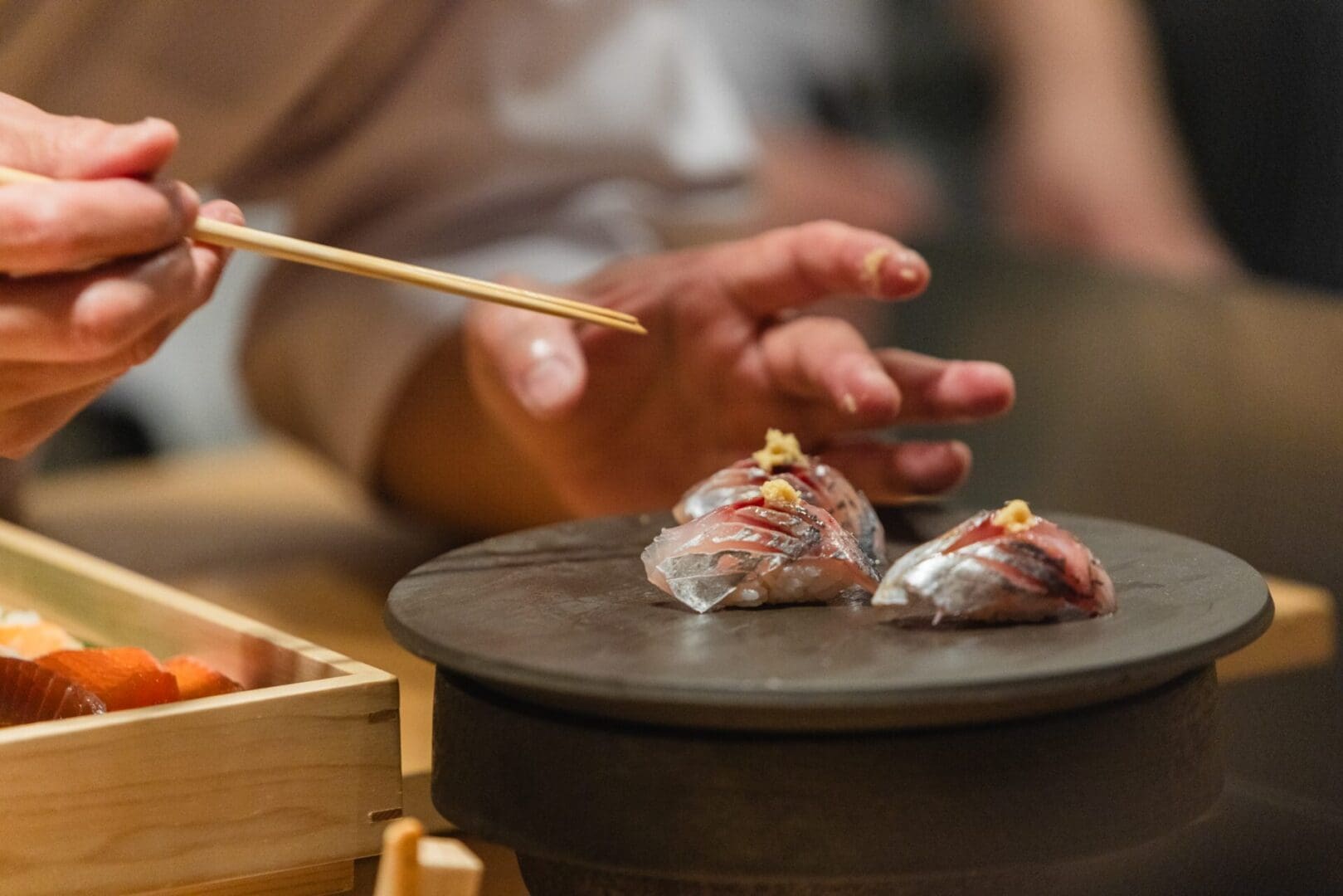
Working alongside his sous chef in the open kitchen directly across the counter, he slices, brushes, garnishes and assembles each course in full view. Some sushi is intentionally positioned fish-first so the fish reaches the palate before the rice. Other pieces are meant to be eaten rice-first. Even soup may arrive in a custom teapot rather than a traditional bowl.
The real star, however, is what arrives from Japan each week.
Because Tanaka selects seafood based on what is best at the markets rather than what he wants to replicate from a standing menu, dinner is constantly changing.
One evening may bring otoro, the richly marbled belly of bluefin tuna known for its almost buttery texture, followed by kinmedai, or goldeneye snapper, prized for its natural sweetness. Another may feature yari ika, a delicate spear squid, or kue, a luxurious long tooth grouper rarely encountered outside Japan.
Then there is nodoguro.
Also known as blackthroat sea perch, the fish is so prized that it is considered among Japan’s great delicacies. Other possible appearances include takabe, or yellow-striped butterfish; freshwater unagi; and kegani, the celebrated horsehair crab harvested off the coast of Hokkaido that has become a favorite at Shinbay.
The experience extends beyond seafood as well.
Depending on the evening, Tanaka may weave beautifully marbled A5 Wagyu into the progression along with Japanese eggplant, daikon radish, bamboo shoots, lotus root and seasonal greens. Ingredients are chosen to complement one another while allowing the natural character of each course to remain front and center.
Perhaps most surprising is the pace.
With more than a dozen courses, rare ingredients and meticulous preparation, Shinbay could easily become an all-night affair. Instead, the entire experience clocks in at approximately two hours.
Courses arrive one by one with enough time to appreciate what is on the plate and hear the story behind it before the next creation takes its place. Despite the precision happening just across the counter, the atmosphere remains relaxed and remarkably personal, helped in no small part by the fact that only a dozen diners share the experience at a time.
And while Scottsdale is more than 5,000 miles from Japan, for those two hours the distance seems considerably shorter.
From early-morning conversations with fish markets across Japan to seafood flown halfway around the world and prepared within inches of each guest, Shinbay does more than serve omakase. It offers a front-row seat to a culinary tradition built on seasonality, craftsmanship and the pursuit of whatever is best that day.
Visit Shinbay
For more information about Shinbay and its omakase experience, visit the restaurant's website.
VISIT SHINBAY →GALLERY